英语介词一篇讲透:用画面记住 in、on、at、through、over
中文一个“在”,英语要分 at、on、in;中文一个“穿过”,英语要分 through 和 across。介词短、常用,又最容易凭感觉用错。本文给每个介词配一张“核心画面”,先记住画面,再把具体用法挂上去,一篇就能把常用介词理清。范围是小学到新概念英语第 3 册。
一、地点:at、on、in
-
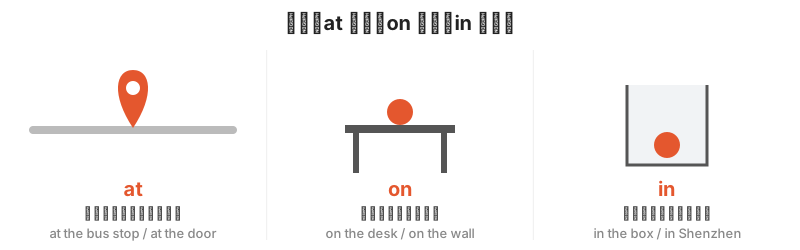
at:一个点,不关心里面有多大。例:at the bus stop,at the door,at home,at work,at school,at the airport
-
on:贴在一个表面上。例:on the desk,on the wall,on the floor,on page 5,on the screen,on the left
-
in:在一个立体空间或范围里面。例:in the box, in the room, in the car, in Shenzhen, in China, in the picture
-
I’m at the airport. 我在机场(把机场当成一个地点)。
-
I’m in the airport. 我在机场里面(强调在建筑内部)。
-
There is a map on the wall. 墙上有一张地图(贴在墙面上)。
交通工具: 能站起来走动的大型交通工具用 on:on the bus, on the train, on the plane;只能坐进去的小车用 in:in a car, in a taxi。
容易错: 城市、国家一律用 in:at Shenzhen → in Shenzhen。网上用 on:on the internet, on TikTok, on X。
二、时间:at、on、in
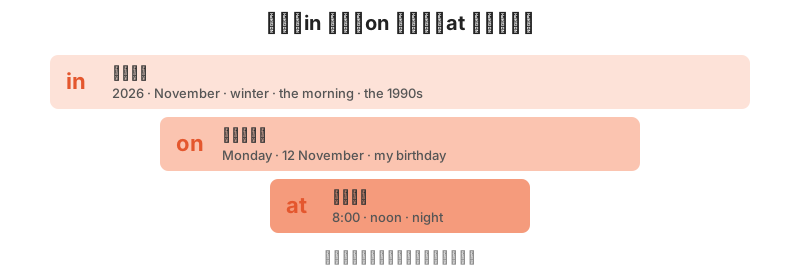
可以想象成一个倒三角:时间越长越大用 in,具体到某一天用 on,具体到某个时刻用 at。
- in:年、月、季节、世纪、年代,一天中的上午/下午/晚上。例:in 2026, in May, in winter, in the 1990s, in the morning
- on:具体某一天、星期几、日期、节日当天。例:on Monday, on 12 November, on my birthday, on Christmas Day
- at:钟点、时刻、固定说法。例:at 8:00, at noon, at night, at midnight, at the moment, at Christmas
最常考的三个细节:
- in the morning,但 on Monday morning:一旦具体到某一天,就用 on。
- at night 是固定说法,不说
in the night表示“晚上”(in the night 是“夜里某个时候”)。 - 有 this、next、last、every 时,不加介词:I’ll call you next week. 不说
in next week。
周末:英式 at the weekend,美式 on the weekend,两种都对。
三、上下关系:over、above、under、below
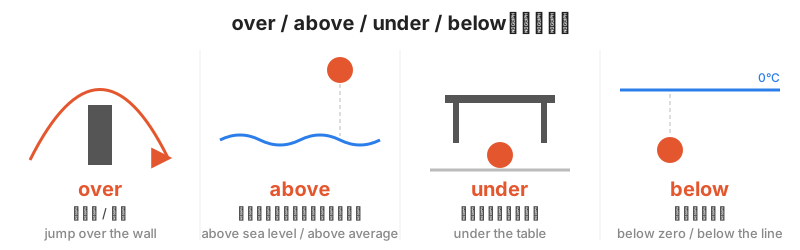
- over:正上方,或从上面越过、覆盖。例:a bridge over the river,jump over the wall,put a blanket over the baby
- above:高于某个水平,不一定正上方。例:above sea level,above average,the temperature is above 30°C
- under:正下方,常被盖住。例:under the table,under the bed
- below:低于某个水平。例:below zero,below average,see the notes below
一句话区分:over/under 讲“正上/正下、覆盖”;above/below 讲“比某条线高/低”,所以数字、水平、标准常用 above/below。
over 还有几个高频引申义:
- 超过:over 100 people(= more than 100 people)
- 在……期间:over the weekend, over the past ten years
- 结束:The meeting is over.
- 遍及:all over the world
under 也可以表示“少于”和“在……之下”:children under 12, under pressure, under construction。
四、动作方向:into、out of、onto、off
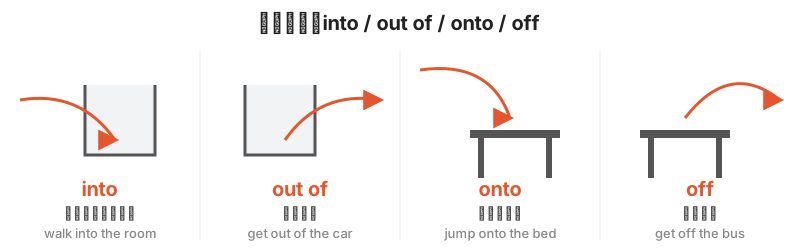
in 和 on 讲“在哪儿”,into 和 onto 讲“动到哪儿去”。
- into:从外面进到里面。例:walk into the room,put it into the box,translate it into English
- out of:从里面出来。例:get out of the car,run out of money
- onto:落到表面上。例:jump onto the bed,climb onto the roof
- off:从表面离开。例:get off the bus,fall off the bike,take off your shoes
上下车的固定搭配:get in / get out of 小汽车、出租车;get on / get off 公交、火车、飞机。
into 还表示“变成”:turn water into ice, change into a different person。
五、路线:through、across、along、past
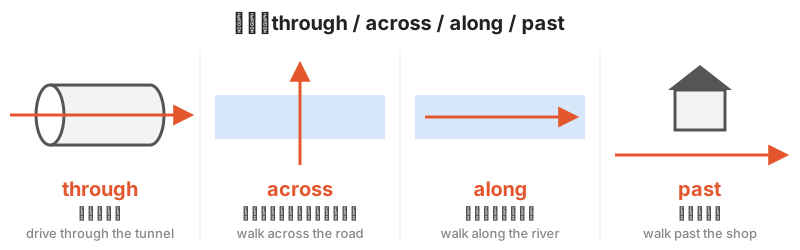
- through:从一个立体空间的内部穿过去。例:drive through the tunnel,walk through the forest,look through the window
- across:从一个平面的一边到另一边。例:walk across the road,swim across the river,across the country
- along:顺着一条长的东西走。例:walk along the river,drive along the coast
- past:从旁边经过。例:walk past the shop,drive past the school
through 和 across 最容易混: 有“里面”、四周被包住(森林、隧道、人群、窗户)用 through;只是一个平面(马路、河、桥、广场)用 across。
through 还常用在抽象意思上:
- 从头到尾:work through the night, read through the document
- 通过、凭借:I got the job through a friend.
- 经历:go through a hard time
六、方向:around、towards、up、down
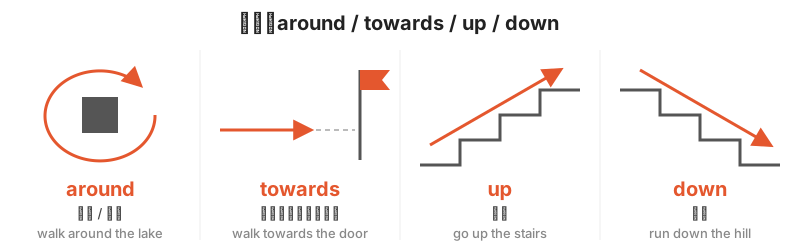
- around:围绕、在周围、到处。例:walk around the lake,travel around the world,around 8 o’clock(大约)
- towards:朝着某个方向,不一定到达。例:walk towards the door,his attitude towards work
- up:向上,也可指沿着路往前。例:go up the stairs,walk up the street
- down:向下,也可指沿着路往前。例:run down the hill,go down the road
to 和 towards 的区别: walk to the door 是走到门口了;walk towards the door 只是朝门的方向走。英式常写 towards,美式常写 toward。
七、位置:between、among、in front of、behind、next to
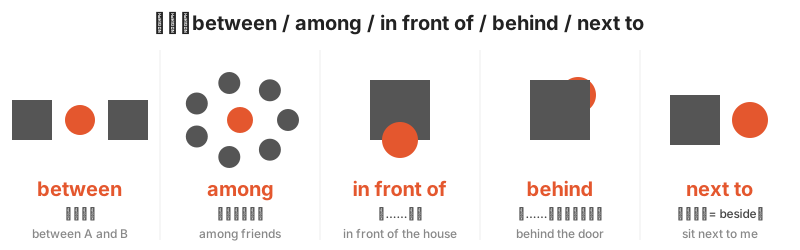
- between:两者之间,或几个明确分开的个体之间。例:between you and me,between 9 and 10 a.m.
- among:三者以上的一群里面,分不清个体。例:among friends,popular among young people
- in front of:在……前面(外部)。例:There’s a tree in front of the house.
- behind:在……后面。例:The cat is behind the door.
- next to / beside:紧挨着、在旁边。例:Sit next to me.
- opposite:在……对面。例:The bank is opposite the hotel.
注意: in front of 是在某物外面的前方;in the front of 是在某物内部的前部。in front of the car 在车前面(车外),in the front of the car 在车的前排。
beside 和 besides 不一样:beside me 在我旁边;besides English 除了英语之外(还有)。
八、时间段:for、since、during、until、by
-
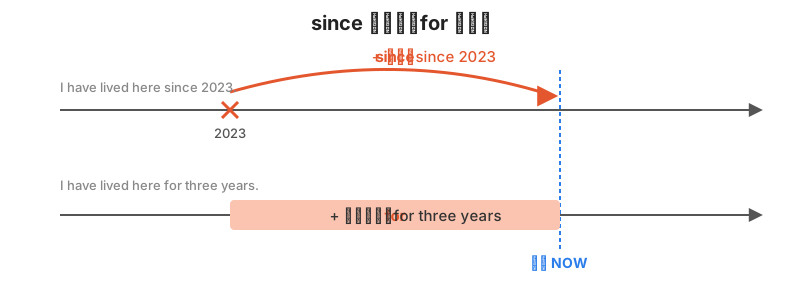
for:一段时长。例:for three years,for two hours
-
since:一个起点(常和现在完成时连用)。例:since 2023,since last Monday,since I graduated
-
during:某个事件或时期之内。例:during the meeting,during the summer holiday
-
in:多久之后(将来)。例:I’ll be back in ten minutes.
-
within:在……之内,不超过。例:within 24 hours
-
I have lived in Shenzhen for three years. 看长度。
-
I have lived in Shenzhen since 2023. 看起点。
-
during three years→ for three years。during 后面接事件,不接数字时长。
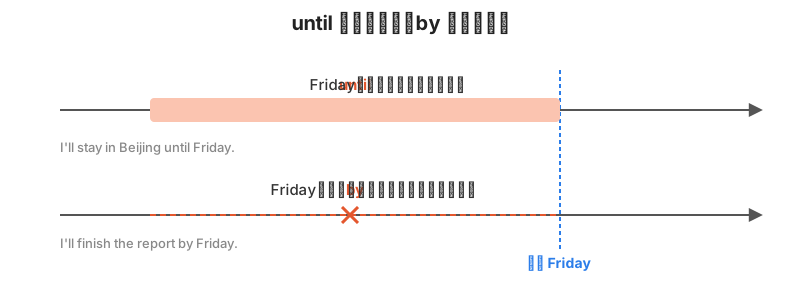
- until / till:一直持续到某时才停。例:I’ll stay in Beijing until Friday.
- by:不晚于某时,截止之前任何时候完成。例:Please send it by Friday.
- before / after:在……之前 / 之后。例:before lunch,after work
- from … to …:从……到……。例:from Monday to Friday,from 9 to 5
职场里 by 用得很多:Could you review my PR by tomorrow? 意思是“明天之前看完就行”。如果说 until tomorrow,就成了“一直看到明天”。
九、其他高频介词:of、for、to、with、by、about、like
- of:所属、部分、内容。例:the name of the app,one of my friends,a cup of coffee
- for:目的、对象、给谁。例:a gift for you,wait for the bus,good for your health
- to:方向、目标、接收方。例:go to work,send it to me,listen to music
- with:和……一起、用(工具)、带有。例:work with the team,cut it with a knife,a girl with long hair
- by:方式、交通、被动动作的执行者、旁边。例:by bus,by email,written by Lu Xun,by the window
- about:关于、大约。例:a book about AI,about 50 people
- like:像。例:She looks like her mother.
- without:没有。例:I can’t work without coffee.
by 和 with 表示“用”: by 接方式,后面不加冠词:by car, by phone, by credit card;with 接具体工具:with a pen, with my phone。注意 on foot(步行)不用 by。
十、固定搭配:一定要整体记
很多介词没有道理可讲,只能和前面的词一起记。下面是最常用的一批。
形容词 + 介词
| 搭配 | 意思 |
|---|---|
| good at | 擅长 |
| interested in | 对……感兴趣 |
| afraid of | 害怕 |
| proud of | 为……骄傲 |
| responsible for | 负责 |
| famous for | 因……出名 |
| different from | 与……不同 |
| similar to | 与……相似 |
| worried about | 担心 |
| excited about | 对……兴奋 |
| busy with | 忙于 |
| familiar with | 熟悉 |
动词 + 介词
| 搭配 | 意思 |
|---|---|
| look for | 寻找 |
| look at | 看 |
| wait for | 等 |
| listen to | 听 |
| depend on | 取决于 |
| focus on | 专注于 |
| belong to | 属于 |
| apply for | 申请(工作、签证) |
| agree with(人) | 同意某人 |
| agree to(提议) | 同意某个提议 |
| arrive at(小地方) | 到达 |
| arrive in(城市、国家) | 到达 |
名词 + 介词
the reason for(……的原因), a solution to(……的解决方案), the key to(……的关键), an increase in(……的增长), access to(获取……的途径), experience in(……方面的经验)。
十一、中国学生最常见的介词错误
| 错误 | 正确 | 说明 |
|---|---|---|
| discuss the plan | discuss 是及物动词,不加 about | |
| arrive in Shanghai | arrive 不接 to | |
| married to her | be married to sb. | |
| next Monday | 有 next、last、this、every 不加介词 | |
| in the morning | 具体到某天才用 on:on Monday morning | |
| go home | home 当副词,不加 to | |
| reply to me | reply 后面要加 to | |
| for two weeks | 数字时长用 for | |
| I’m good at English | 擅长用 good at | |
| enter the room | enter 直接接地点 | |
| different from | 英美通用的标准搭配是 different from |
十二、总结:一张表记住核心画面
| 介词 | 一句话画面 |
|---|---|
| at | 一个点:地点、时刻 |
| on | 一个面:表面、某一天 |
| in | 一个空间:里面、较长的时间段 |
| into / out of | 进去 / 出来 |
| onto / off | 落到面上 / 离开面 |
| over / under | 正上方或越过 / 正下方 |
| above / below | 高于 / 低于某条线 |
| through | 从内部穿过 |
| across | 从平面一边到另一边 |
| along | 顺着长边 |
| past | 从旁边经过 |
| around | 围着转 |
| towards | 朝着,不一定到 |
| between / among | 两者之间 / 一群之中 |
| for / since | 一段时长 / 从某个起点开始 |
| until / by | 一直持续到 / 不晚于 |
学介词的三个建议:
- 先记画面,再记例句。遇到新用法时,问自己它更像“点、面、空间”还是“穿过、越过、沿着”。
- 固定搭配按短语整体记,不要拆开单记介词。
- 读英文时多留意介词,把好的句子抄进生词本。比起背规则,见得多了自然就有语感。